+91 9759055511
+91 9759055522
info@rimsdun.com

Affordable Hotel Management Diploma in Dehradun: A Guide to Fees, Duration & Careers
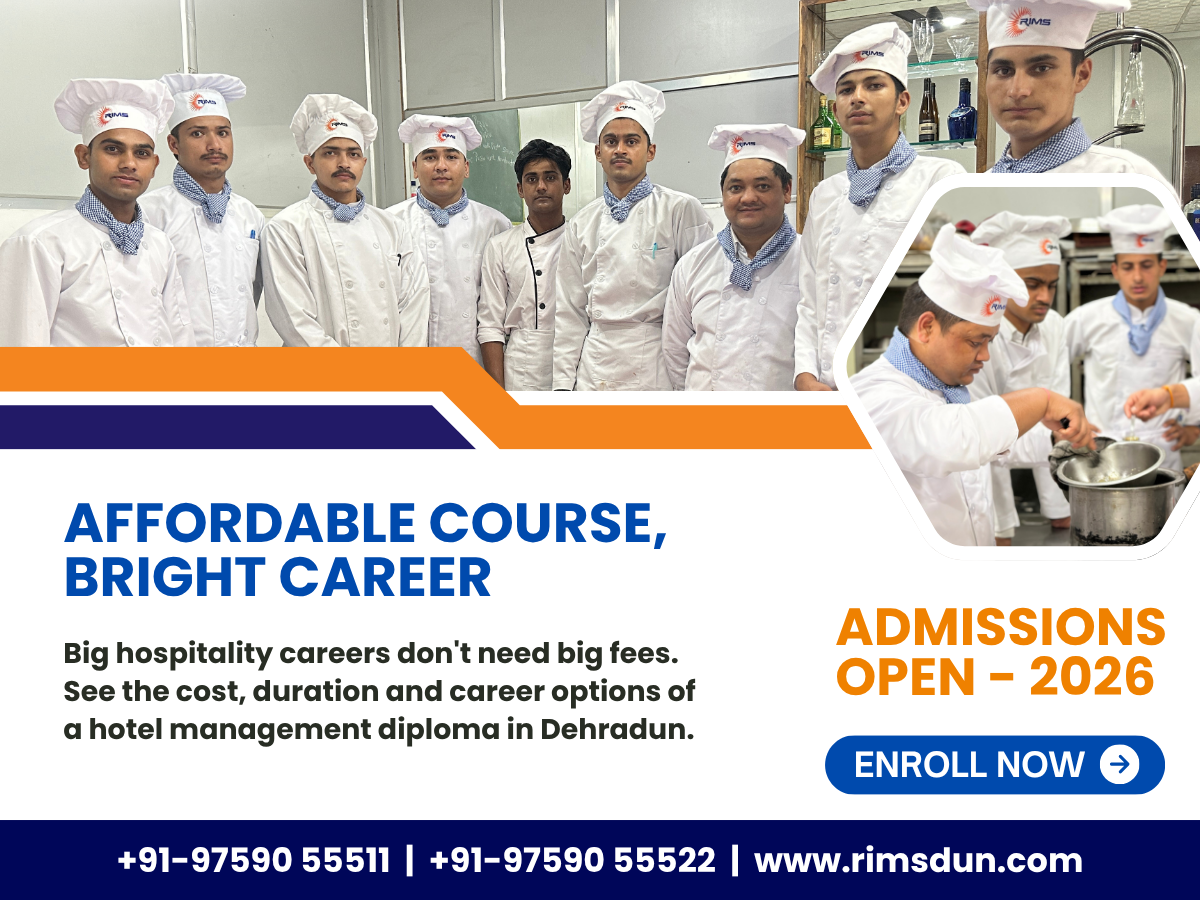
After Class 12, choosing the right career path can feel overwhelming. If you possess a passion for guest services, culinary arts, restaurants and global travel, the hospitality industry offers a range of career opportunities.
An affordable hotel management diploma Dehradun can be an option for students who want to develop practical hospitality skills while studying in a city connected with tourism destinations such as Mussoorie, Rishikesh and Haridwar. But choosing a diploma should involve more than looking at the course name or advertised fee. Duration, curriculum, practical classes, industrial training, facilities, qualification and career support can all affect the value of a programme.
This guide explains what a hotel management diploma Dehradun programme involves, what students may learn, how long programmes can take, what to consider when comparing fees and which entry-level career paths students can explore after completing the course.
What Is a Hotel Management Diploma?
A hotel management diploma is a career-focused programme that introduces students to the main areas of hospitality operations. It generally combines classroom learning with practical sessions so students can understand how different hotel departments work. Depending on the programme, students may study:
-
Food Production: Basic cooking methods, food preparation, kitchen operations and hygiene.
-
Food and Beverage Service: Restaurant service, order taking, table service and guest interaction.
-
Front Office Operations: Reservations, check-in and check-out procedures, guest enquiries and basic front office work.
-
Housekeeping: Room preparation, cleanliness standards and accommodation operations.
-
Communication Skills: Professional communication and interaction with guests and colleagues.
-
Hospitality Management: Basic hotel administration and service operations.
-
Hygiene and Safety: Food safety, workplace hygiene and safe hospitality practices.
Why Choose a Diploma Over a Degree?
A diploma can suit students who want focused training and an earlier introduction to hospitality work. Compared with a longer degree programme, it can provide a more concentrated learning path.
Shorter Study Period
Many hotel management diploma programmes are designed to be completed in around one year, although the exact duration depends on the institution and programme structure. A shorter course may allow students to complete their initial training sooner and start exploring entry-level opportunities.
Focus on Practical Learning
Hospitality involves direct interaction with guests and day-to-day hotel operations, so practical learning is an important part of preparation. Students may receive hands-on training in areas such as food production, food and beverage service, housekeeping and front office operations. The amount of practical training depends on the programme.
Potentially Lower Overall Cost
A shorter programme may have a lower overall education cost than a multi-year degree. However, students should not assume that every diploma will be cheaper. The total cost can depend on tuition fees, examination charges, uniforms, practical equipment, study materials, industrial training and other expenses.
How Long Does It Take to Complete a Hotel Management Diploma?
The duration of a hotel management diploma in Dehradun depends on the institution and programme structure. Some programmes may be completed in around one year, while others can take longer. The programme may combine classroom and practical learning with industrial training or internship opportunities, depending on the institution.
Students should check exactly how many months they will spend studying on campus and whether practical training is included as part of the course. Before admission, ask the college about the programme duration, practical training schedule, industrial training arrangements, final examination dates and any additional charges for certification or practical assessments.
Eligibility Criteria and Admission Process
The eligibility requirements for a hotel management diploma can vary by institution, but students should generally check the following:
Educational Qualification: Many diploma programmes require students to have passed Class 12 (10+2) from a recognised board. Students from Arts, Science, or Commerce streams may be eligible, depending on the institution.
Minimum Marks: Some institutes may require only passing marks, while others may set a minimum percentage. Check the specific programme requirements before applying.
Age Limit: Age requirements vary by institution. Some programmes may have no specific upper age limit, while others may set an age range for admission.
Admission Process: Admission may be offered through direct admission, merit based on Class 12 marks, or an institute-level selection process. Some institutions may also conduct a personal interview to assess communication skills and interest in hospitality.
Documents Required: Students may be asked to submit Class 10 and 12 certificates, identity proof, photographs and other documents specified by the institute.
Career Opportunities Available After a Hotel Management Diploma
A hotel management diploma can provide an entry point into a career in hospitality industry, particularly in operational roles across hotels, resorts, restaurants and other hospitality businesses. As a diploma graduate, you generally enter the hospitality industry at a foundational operational level. Because a diploma is a shorter, practical programme, graduates typically begin by gaining hands-on experience rather than entering directly into managerial positions. The exact entry-level career opportunities available can include:
Front Office:
You start as a Front Office Associate, Receptionist, or Bell Desk Attendant. Your daily tasks involve checking guests in and out, handling room keys, sorting luggage, and answering basic telephone enquiries.
Food & Beverage (F&B) Service:
You start as a Steward, Waiter, or Banquet Service Associate. Your job focuses on welcoming guests at tables, taking orders, serving food and beverages, clearing tables, and setting up event halls.
Food Production (The Kitchen):
You start as a Commis III (Junior Trainee Cook) or Kitchen Utility Staff. You do not create menus; instead, you handle "mise-en-place" (chopping vegetables, preparing ingredients), kitchen sanitisation, and basic dish plating under senior chefs.
Housekeeping:
You start as a Room Attendant or Housekeeping Trainee. Your responsibilities involve making beds, cleaning guest rooms, replenishing towels or toiletries, and ensuring public hotel areas look pristine.
Salary Package After a Hotel Management Diploma
The starting salary after a hotel management diploma depends on factors such as the job role, location, employer, practical training and previous experience. Entry-level positions in front office, food and beverage service, food production and housekeeping may have different salary levels. Instead of focusing only on a fixed salary figure, students should consider the type of role, opportunities for skill development, working environment and scope for career growth. Gaining practical and industrial exposure during the programme can also help students understand hotel operations and prepare for entry-level positions.
Conclusion
A hotel management diploma can provide a focused starting point for students who want to enter the hospitality sector after Class 12. The course can introduce students to practical areas such as front office operations, food and beverage service, food production and housekeeping while helping them understand how hotels function on a day-to-day basis.
For students considering an affordable hotel management diploma Dehradun, the course fee should not be the only factor in the decision. Duration, curriculum, practical training, industrial exposure, facilities, qualification and career support can all affect the overall value of a programme. If your goal is to build a career in hospitality industry, compare what each programme actually includes before taking admission.
Frequently Asked Questions
1. What is a hotel management diploma?
A hotel management diploma is a career-focused programme that introduces students to key areas of hospitality operations, including front office, food production, food and beverage service, housekeeping and guest service.
2. How long is a hotel management diploma in Dehradun?
The duration depends on the institution and programme structure. One-year programmes are common, while some diploma or advanced diploma programmes may take longer. Students should confirm the exact duration before admission.
3. Is a hotel management diploma suitable after Class 12?
Yes. Diploma programmes can be an option for Class 12 students who want focused hospitality training and want to explore entry-level opportunities without immediately pursuing a longer degree.
4. What subjects are taught in a hotel management diploma?
Common subjects include food production, food and beverage service, front office operations, housekeeping, communication skills, hospitality management, hygiene and safety. The exact curriculum varies between institutions.
5. Does a hotel management diploma include industrial training?
It depends on the programme. Some institutions include internships or industrial training, while others may have different practical-training arrangements. Students should check the duration, training location, departments covered and any additional charges before enrolling.
Recent Blogs




RADIANCE INSTITUTE OF MANAGEMENT STUDIES (RIMS) registered under the aegis of Radiance Educational & Social Welfare society.. Read More

© 2026 All Rights Reserved. Developed By ERAONS